
Family reunion venues, and the walking-distance test
Why separate rentals across town fail while several houses on shared grounds work, how to divide the planning, and what four generations actually need from a property.
The short version: the hardest part of planning a family reunion is finding a property large enough to hold everyone. Places that genuinely sleep 40, 60 or 90 people are rare, so most families end up compromising — several houses spread across driving distances, with none of them big enough to gather the whole group comfortably. The reunion then fractures into the same small clusters every evening, which is the one thing it was meant to prevent.
The number of buildings is not the problem. The distance between them is. Below about 24 guests a single large house works, and up to around 44 a large estate can hold everyone under one roof. Above 44 almost every venue is multiple buildings — that is simply how capacity works at that scale — and what separates a compound from four rentals across town is that a compound sits inside one property line you can cross on foot. Because reunions happen on summer and holiday weeks, properties that can do this are frequently booked a year out.
It isn't the number of houses. It's the distance between them.
Spreading the family across several rentals is the compromise most large groups are forced into. It is also what most often leaves people feeling the reunion never quite happened.
It is a reasonable compromise, and usually the only one on offer. You have 50 people, nothing you can find sleeps 50, so you book four houses within ten minutes of each other. Everyone has space, the cousins with small kids get their own place, and the total looks better than one large property would have.
Then the first evening arrives and the problem shows itself. There is no room anywhere that holds 50 people. So dinner happens in three separate houses, or in shifts, or at a restaurant that can barely seat you. The uncle you drove six hours to see is at the other house. Getting everyone into one place takes a text thread, a caravan of cars, and twenty minutes of coordination — so it happens once, maybe twice, in four days.

The version that works is a property where being together is the default rather than a plan. One space that seats the full group for a meal. Common rooms people wander into without arranging it. Enough bedrooms and quiet corners that nobody feels trapped — but all of it inside a boundary you can cross on foot.
Under about 44 people, that is usually one very large house. Above 44 it is almost always several buildings — and that is fine, provided they share the same grounds. Four houses on one 130-acre property with trails between them behave nothing like four houses on four streets, even when the drive time between the latter is only ten minutes. One is a family spread across a place they all belong to. The other is a group text.
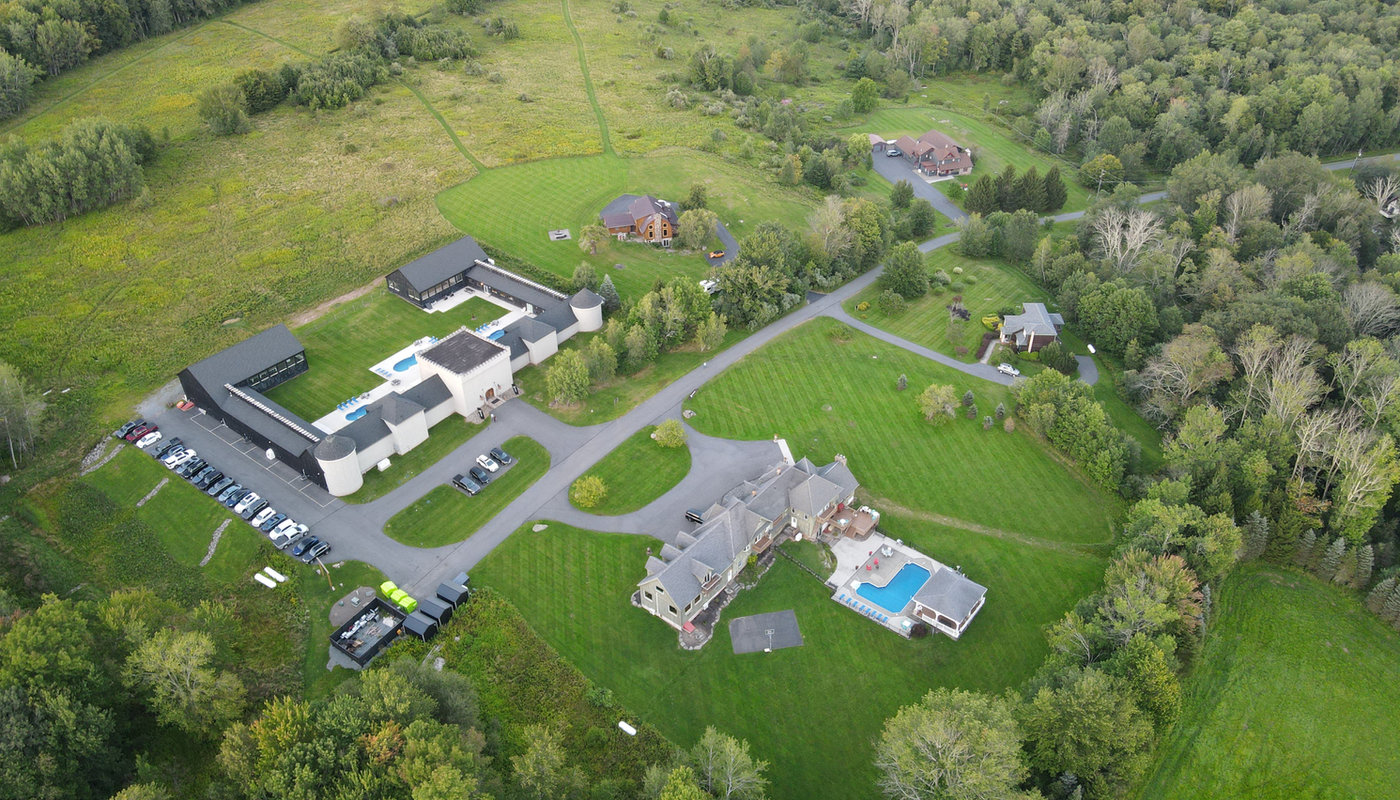
So the test is not bedroom count, and it is not building count. It is this: can a three-year-old walk to their grandmother without anyone starting a car? If yes, the venue works at any size. If no, it will disappoint at every size.
What your headcount actually requires
Capacity does not scale smoothly. These are the points where the kind of property you need changes.
One large house
The widest choice and the easiest booking. Prioritize a dining table that genuinely seats everyone over extra square footage, and check the bathroom count before the bedroom count.
An estate
Ordinary vacation rentals thin out fast here. You need a purpose-built large property — two kitchens, roughly a bathroom for every four people, and more than one common room so the group can split and re-gather. For comparison, the Castle has 26 bathrooms for 44 guests.
Multiple buildings
Past this point one roof stops being literal, and that is normal — almost every venue at this size is multiple buildings. What matters is that they sit on the same grounds within walking distance, not ten minutes down the road.
A full compound
Very few properties in the country hold a family this size on shared land. Expect to book close to a year ahead, especially for a summer or holiday week.
Running the planning committee
Reunions are rarely organized by one person. They are organized by a handful of relatives, which is a real advantage if the work gets divided deliberately and a source of friction if it doesn't. Four jobs, four owners.
The venue
One person should shortlist and one person should book. Committees are good at narrowing options and bad at closing on them, and large properties get taken while a group text deliberates.
Agree the non-negotiables before you start looking — headcount, dates, drive time, accessibility — and treat everything else as preference. Then give whoever books the authority to sign when the shortlist is agreed.
Room assignments
The least glamorous job and the one most likely to cause bad feeling. Do it deliberately rather than first-come.
- Ground-floor rooms go to whoever needs them, decided before anyone claims anything
- Families with young children near each other, and not next to the relatives who sleep lightly
- Publish the assignments once, as a decision, not a draft to negotiate
- If bedrooms differ a lot in size or private bathrooms, price them differently rather than pretending they're equivalent
Meals and the itinerary
The most common error is over-programming. Four generations do not want the same activity, and a packed schedule means people opt out and disappear into bedrooms.
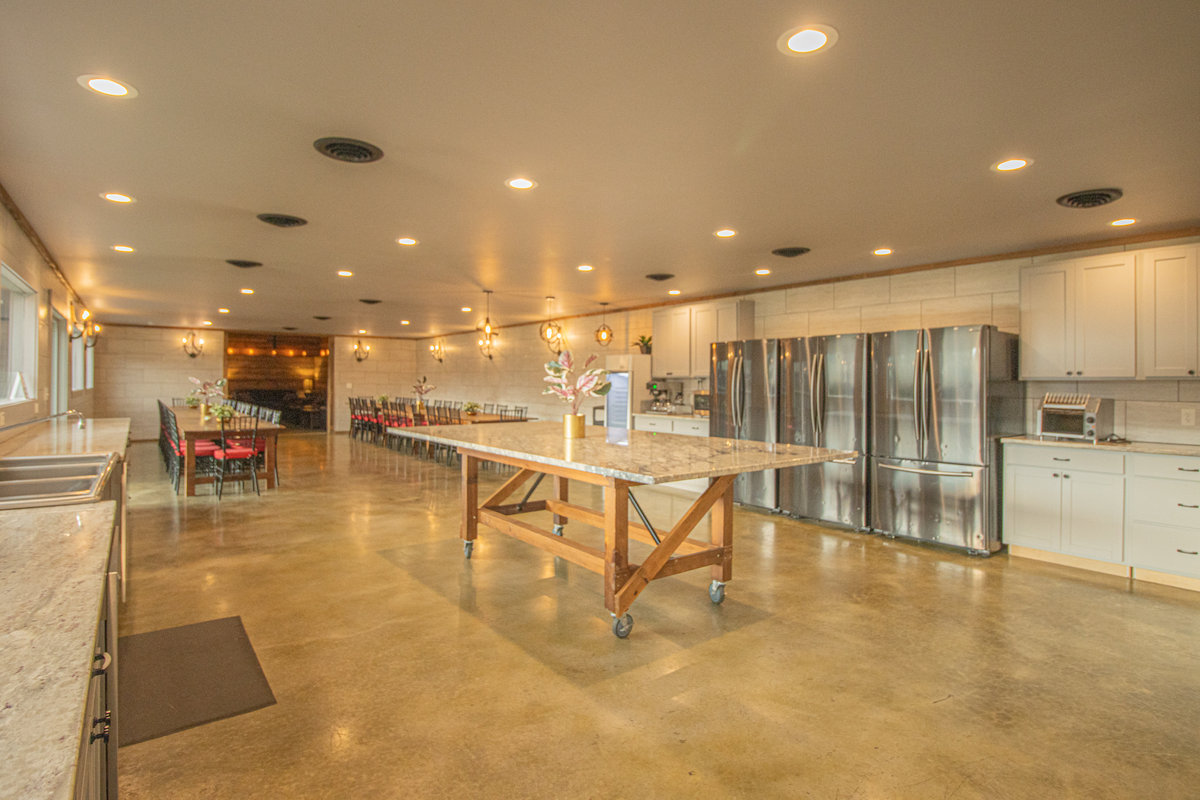
The pattern that works is one anchor per day that everyone attends — usually dinner — with the rest of the day loose. Assign each night to a different branch of the family to cook, or cater the two nights nobody wants to cook, and leave the rest open. Confirm the kitchen situation before planning any of it; one kitchen cannot produce a meal for 40.
Collecting the money
The job nobody wants, and the one where reunions actually go wrong. Usually one relative puts the deposit on a personal card and spends the next six months asking cousins for money. That is a lot of financial exposure for one person and a lot of awkward conversations.
- Set the per-family or per-adult share before booking, not after
- Collect shares before the balance is due, so no one is fronting the whole thing
- Use a group payment app where the amounts and who has paid are visible to everyone — visibility does the chasing for you
- Decide early how you handle a family that drops out, because one will
- Write down what the price includes, so "I thought food was covered" happens now instead of at checkout
Four generations, one property
The reason a reunion venue is harder to choose than a vacation rental: your guests range from toddlers to people in their eighties, and the property has to work for all of them at once.
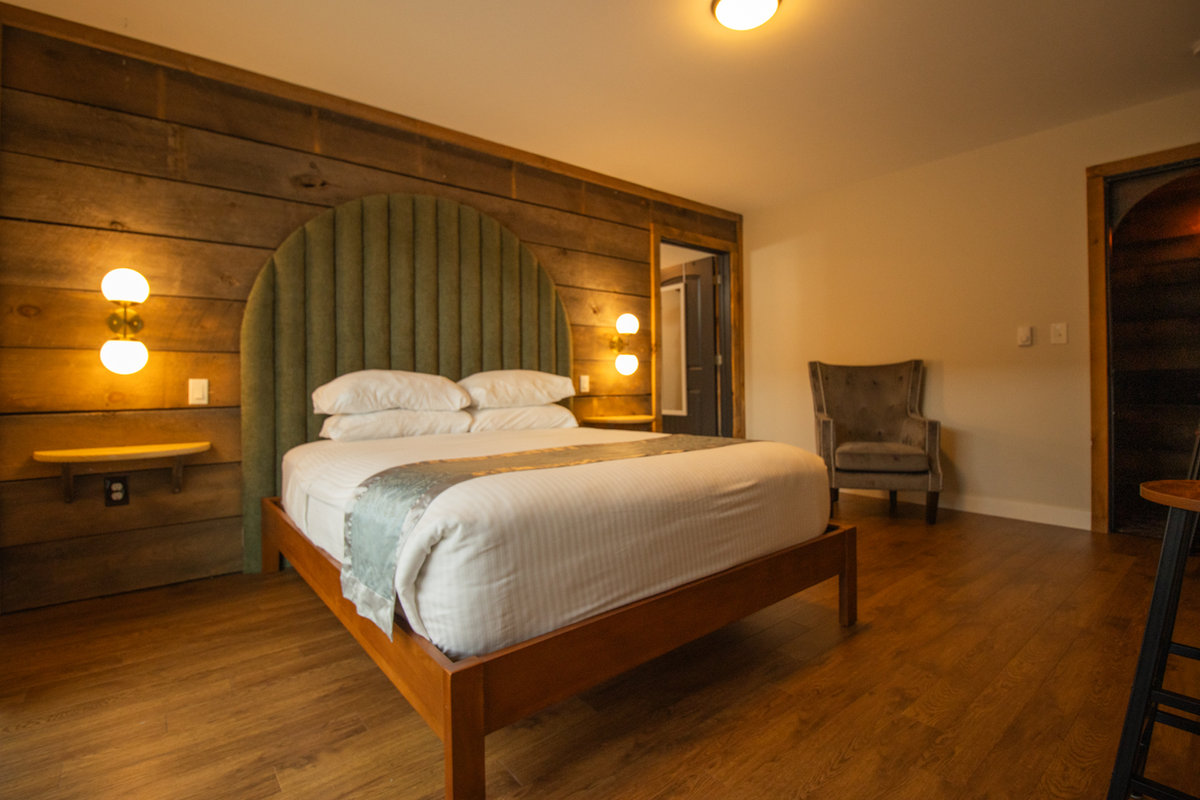
Ask about stairs before anything else. A property with twenty beautiful bedrooms up two flights excludes anyone who can't manage them — and at a multigenerational reunion, that is frequently the person the whole reunion is being held for. What you want to confirm specifically: how many bedrooms are on the ground floor, whether the main living and dining areas are step-free, and whether any bathroom is genuinely accessible rather than merely large.
Ask what the oldest and youngest do all day. Venues describe their amenities for the middle of the age range. The hiking trail is wonderful and irrelevant to a great-grandmother; the nightlife nearby is irrelevant to everyone with a toddler. A reunion property needs things happening in the same place at the same time for different ages — which usually means indoor and outdoor options side by side, so nobody is stuck choosing between participating and being comfortable.
Ask what happens when it rains. This is the question that separates venues that work from venues that photograph well. If the entire plan is outdoors and the forecast turns, you have 40 relatives, one living room, and three days. Indoor recreation that spans ages — a theater, bowling, indoor courts, a heated indoor pool, several separate common rooms — is what makes a reunion work in any season and any weather. It is also what makes the cheaper shoulder-season dates safe to book.

At Hilltop, the Castle has two accessible bedrooms and most of the main living space on one floor. If accessibility matters for your group, ask us directly about your specific needs rather than working from a feature list — get in touch and we'll tell you plainly whether we can accommodate it.
Four houses, 130 acres, one property line
Hilltop is in Beach Lake, Pennsylvania, about two hours from Manhattan and Philadelphia. Rent one house or combine several — they share the same grounds and trails, so the whole group stays within a short walk of each other. Each one has a different character.
The Castle
Up to 44 guests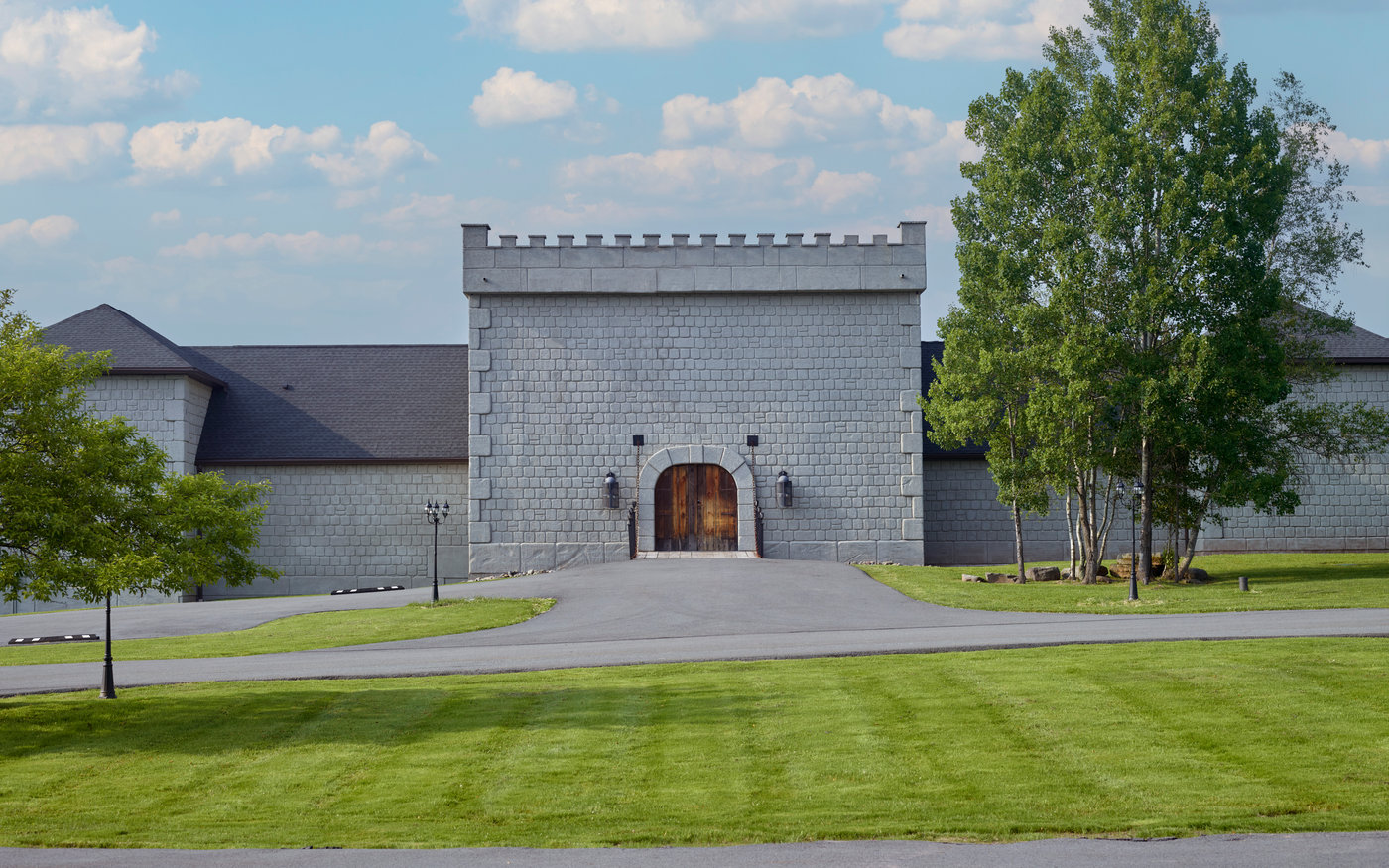
The most bedrooms and by far the most to do — a 72-seat theater, two side-by-side candlepin bowling alleys, an indoor basketball court, and three outdoor pools. If your reunion is under 44 people, this holds the entire family under one roof with no coordination required. Every bedroom has its own bathroom, 26 in the building altogether. Two accessible bedrooms, most of the main living space on one floor.
The Mansion
Up to 26 guests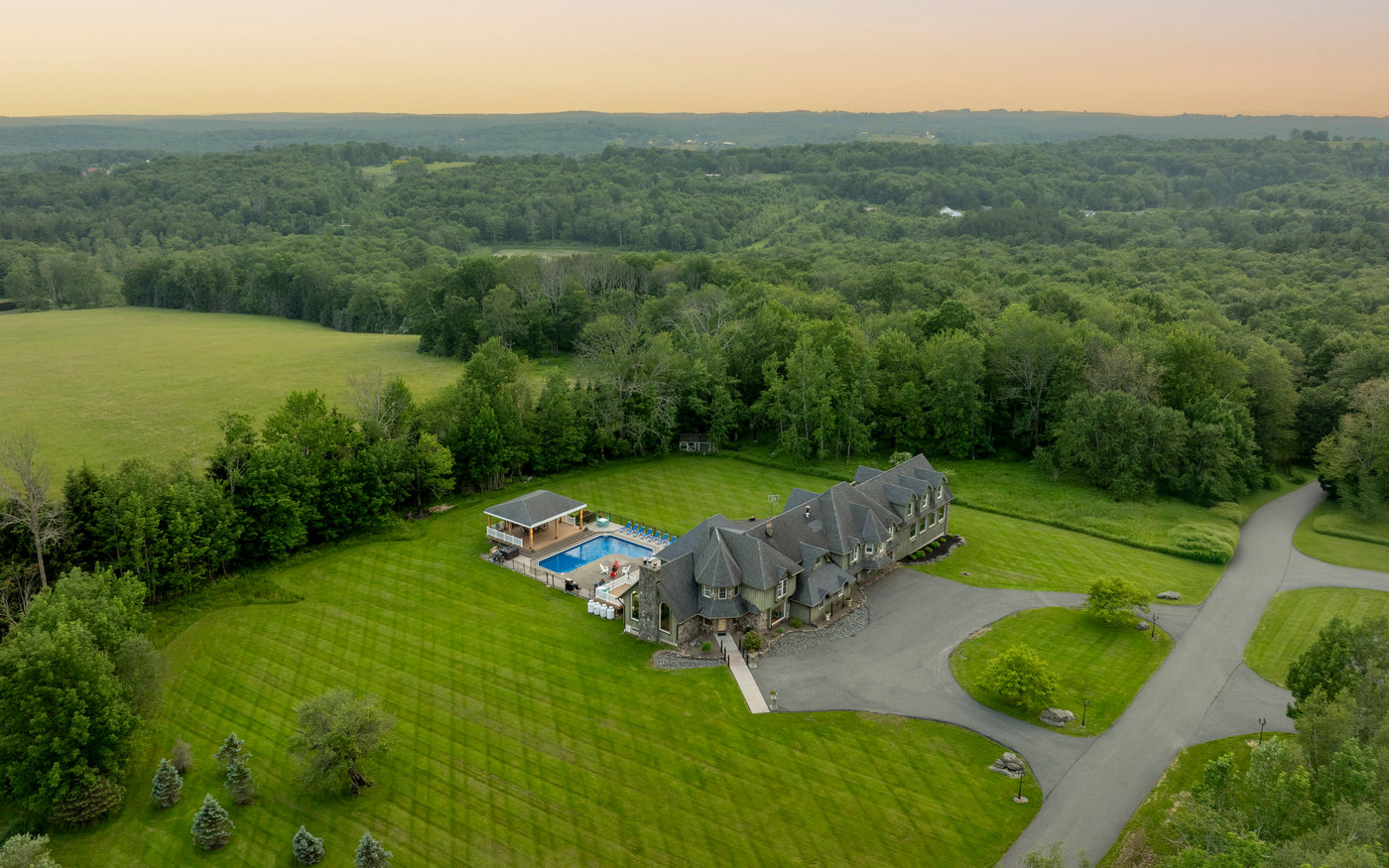
Large, but it feels more like a home than an institution — the choice when a family wants space without the reunion feeling like an event venue. Frequently added to the Castle for groups pushing past 44.
The Farmhouse
Up to 16 guests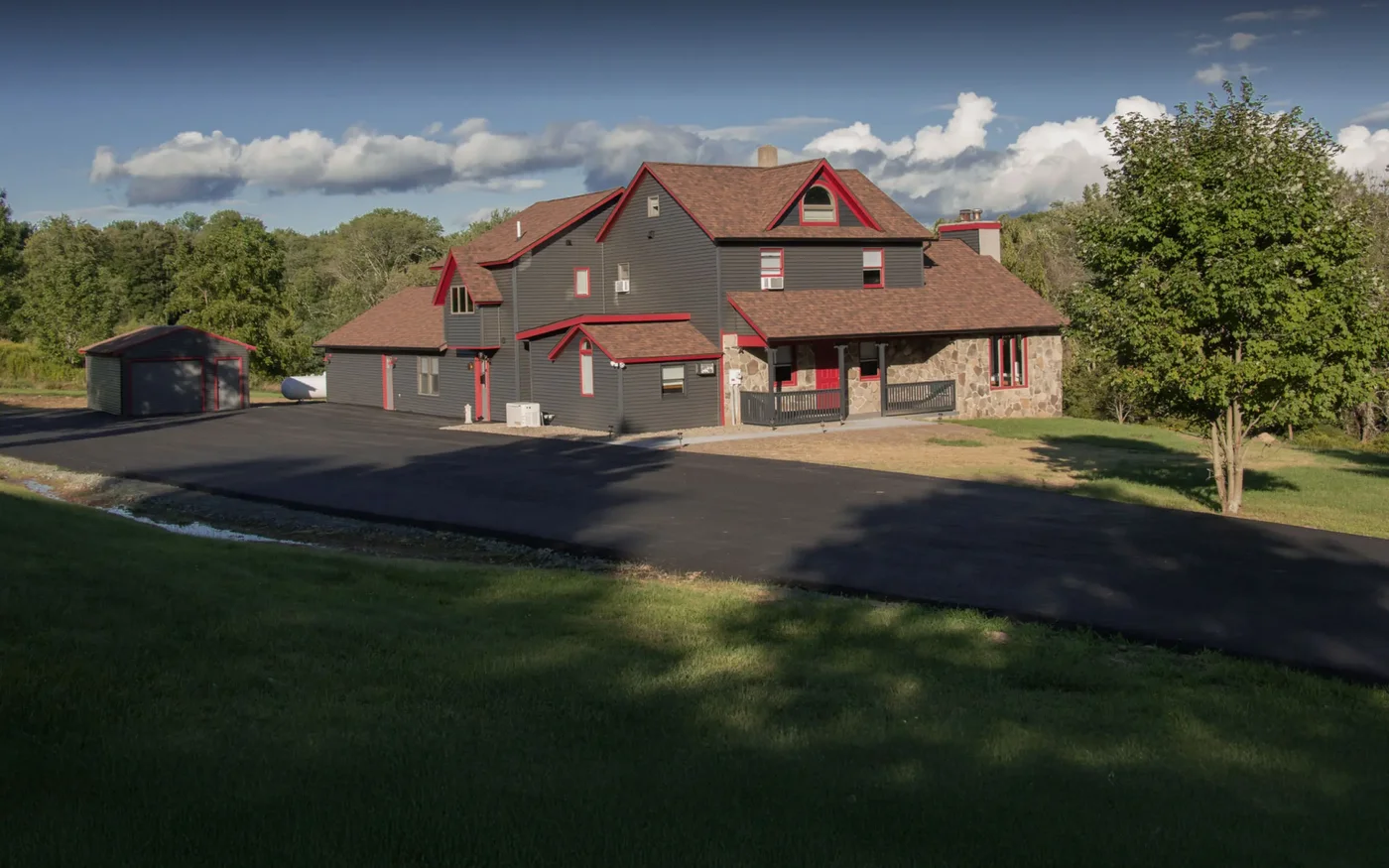
Has the heated indoor pool, which matters more than it sounds — it is the thing that keeps small children and older relatives happy on a cold or rainy afternoon. A quieter corner of the property for the branch of the family that wants one.
The Lodge
Sleeps 6, or 8 with cots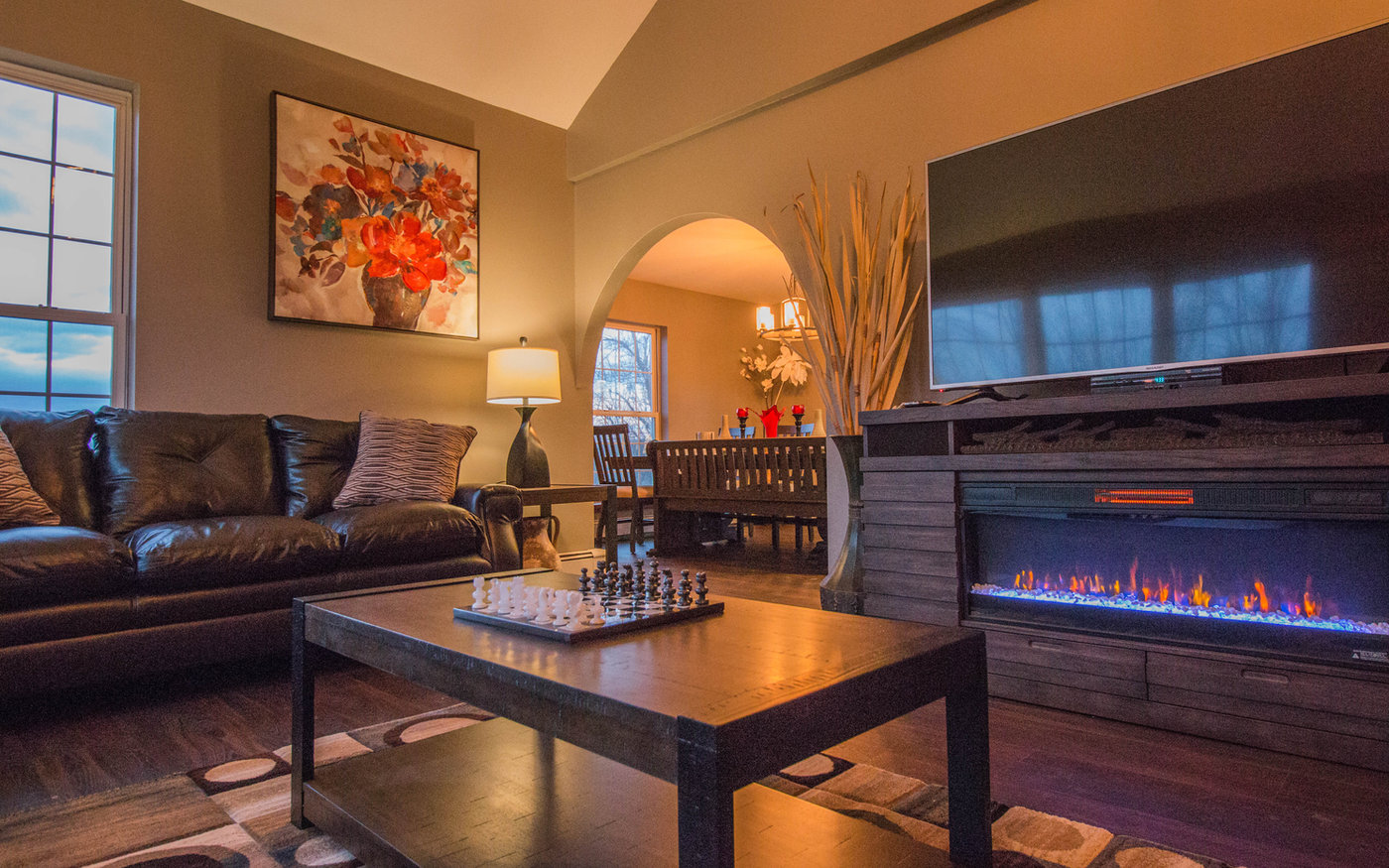
Either a small reunion on its own, or the overflow that gets a group over the line — the extra sleeping space for late-arriving cousins, or a private spot for grandparents who want quiet at the end of the day.
Common questions
One property, almost always — but that does not mean one building. Groups that book three or four houses a short drive apart discover the problem at dinner: no single house holds everyone, so the reunion splits into the same small groups every night. Several buildings on shared grounds work perfectly well, because nobody has to get in a car. What fails is separate addresses, not separate roofs.
Summer weeks and holiday weeks are the constraint. Large properties that can hold an entire extended family are rare, and those dates are often booked a year ahead. If your reunion is tied to a specific summer week or a holiday, start looking as soon as the date is fixed rather than waiting for a final headcount.
Most reunions have one organizer put the deposit on a card and collect from families afterward, which puts real financial risk on one person. Better: set a per-family or per-adult share up front, collect it before the balance is due rather than after, and use a group payment app so amounts and who has paid are visible to everyone. Decide before booking how bedrooms of different sizes are priced — that is the conversation that causes friction later.
Ask specifically about ground-floor bedrooms, step-free access to the main living and dining areas, and accessible bathrooms. A venue with twenty bedrooms up two flights of stairs excludes anyone who cannot manage them — which at a multigenerational reunion is often the person the reunion is being held for.
Roughly: 10 to 24 guests fits in a single large house; 24 to 44 needs a very large house or estate; above 44 you generally need multiple buildings on one property. At Hilltop, groups of 10 to 44 fit in the Castle alone, and groups of 44 to 92 use two or more houses that share the same 130 acres and sit a short walk apart.
Ask any venue this before booking — a rained-out reunion with forty people and one living room is a long weekend. Look for indoor recreation that works across ages: a theater, bowling, indoor courts, a heated indoor pool, and several separate common rooms so people can spread out without leaving. See our on-site activities for what that looks like here.
Get the whole family on one property
Four houses on 130 private acres in the Poconos, two hours from Manhattan. Ten guests or ninety-two, everybody within a short walk of each other.